
About
A student engineering team that designs, builds and races solar cars at the University of Washington.
Build the best car. Build better engineers.
Washington Solar Car exists to design and race the most efficient solar car we can, and to develop exceptional engineers along the way. Students own every system on the car, from the custom battery management system to the composite chassis, and see their work tested over hundreds of miles of public road. Each season, we aim for a faster car and stronger engineers.
Efficiency wins races.
A solar car runs on a fixed budget: whatever sunlight lands on its panels. No team gets more of it than any other. What separates the field is how much each team can do with it, and that comes down to efficiency: how cleanly the car moves through the air, how little it weighs, and how little energy it loses between the sun and the road.
That is the problem we work on, car after car. Every design decision gets tested against physics and then against hundreds of miles of open road, and the results are public. We measure ourselves by how we perform when it counts, and we keep finding more efficiency to make the next car faster and go further on the same sunlight.
Eleven months to the starting line.
Washington Solar Car was founded in 2023, when few people were willing to back an unproven idea. It took its first car, Sockeye, from the start of design to the starting line in eleven months, less than half the two years most teams take, and earned Rookie of the Year. The following year, in its first cross-country endurance race, it finished as the #1 American team in the Single-Occupant Vehicle class. When the car needed a trailer to cross the country, or funding fell short, our community stepped up every time. That support is the real strength behind everything this team has achieved.
About the race
Solar car racing tests efficiency and reliability as much as speed. Every team has to clear three stages, and most of the field drops out along the way.
25
of 29 teams reached the track
1. Pass tech
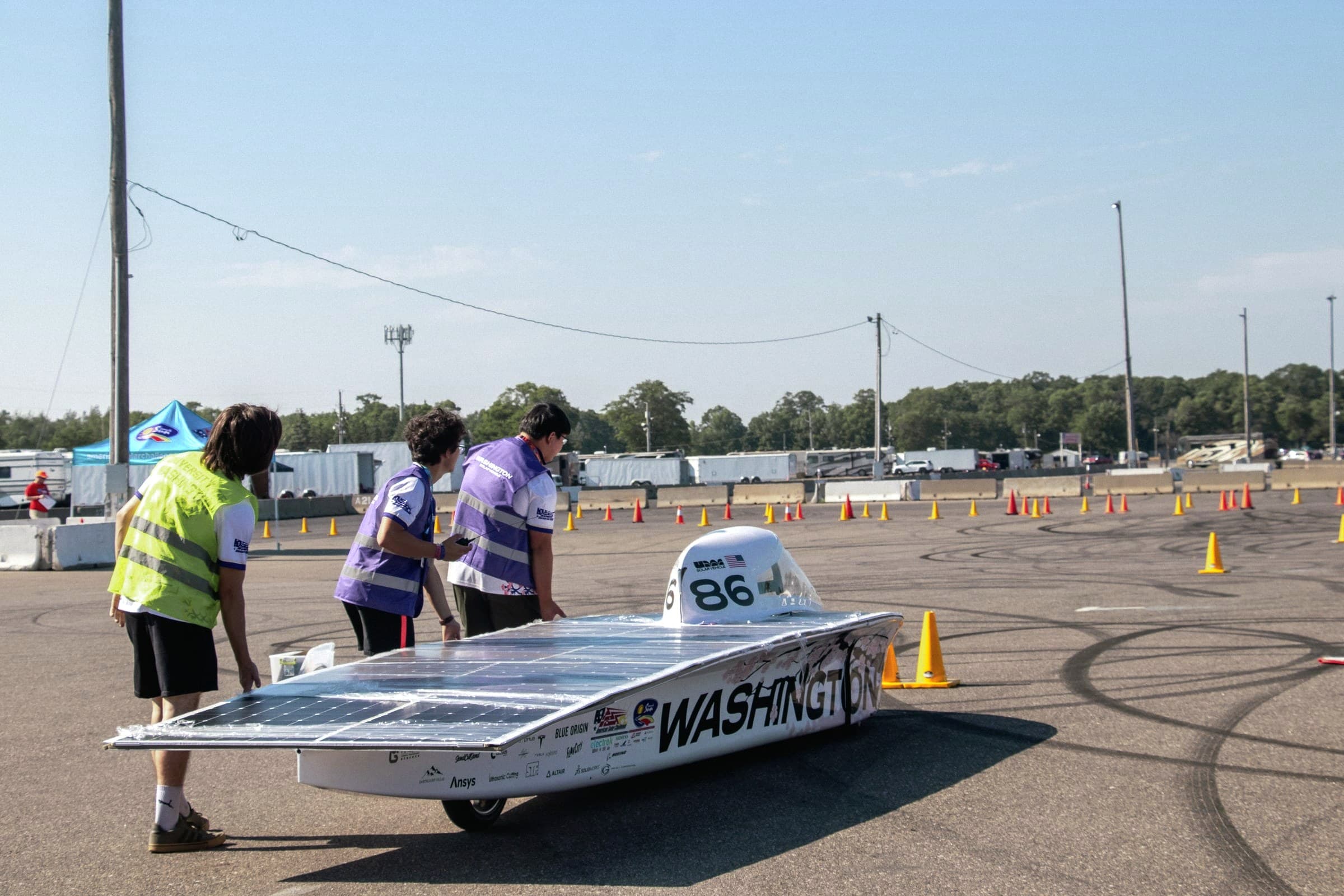
Before any racing, judges inspect every car in a process called scrutineering. They check it against the regulations, confirm it is roadworthy, and run dynamic tests of braking and handling.
13
qualified for the cross-country race
2. Qualify on the track
The Formula Sun Grand Prix is a multi-day race on a closed circuit. Only teams that qualify there may start the American Solar Challenge.
4
completed the full race
3. Finish the race
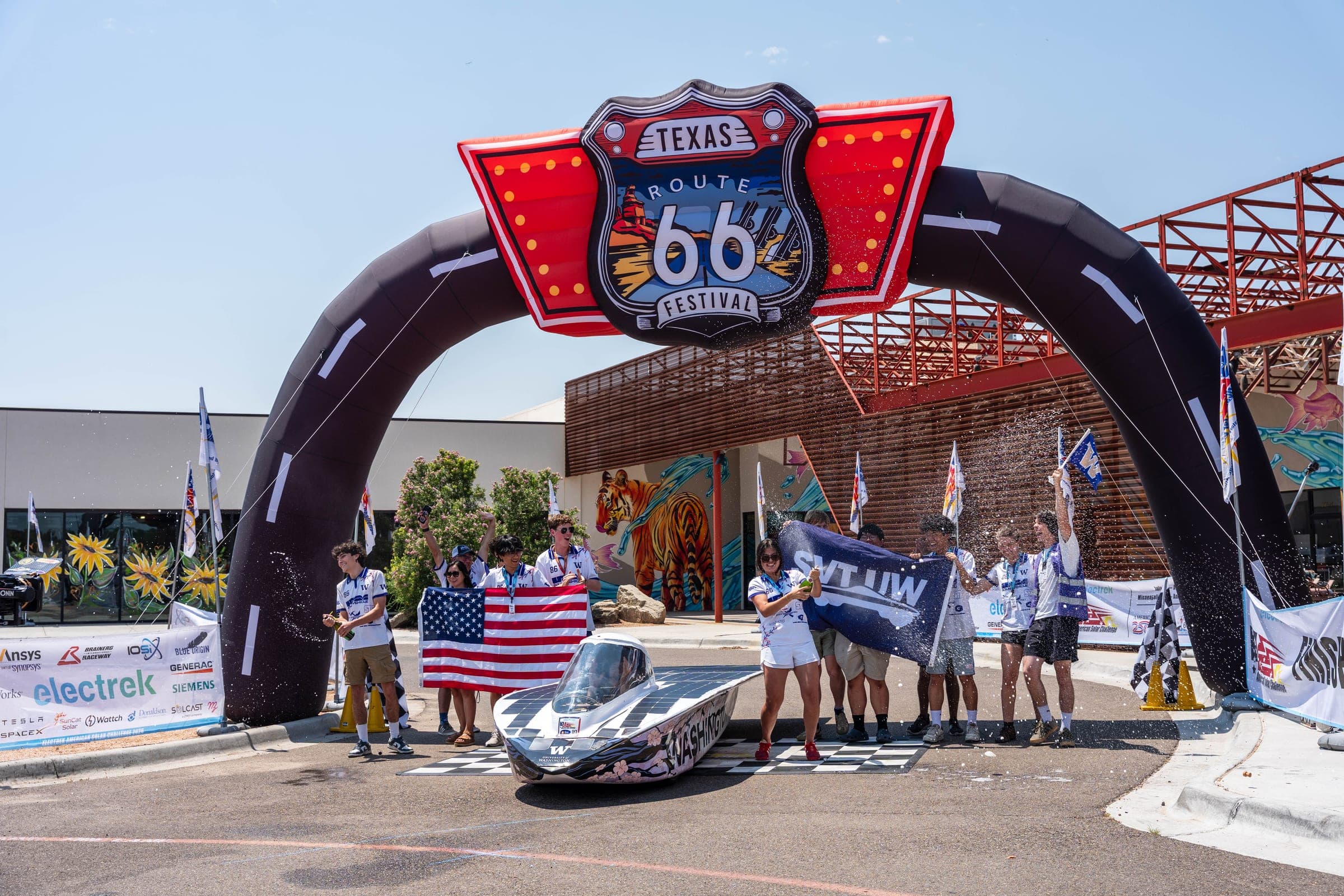
The American Solar Challenge runs in daily stages over more than 1,500 miles of public road. In 2026 it ran from Minneapolis to Amarillo along the Great River Road and Historic Route 66, as an official Route 66 Centennial project.
The #1 American team in the SOV class, and 4th overall
We were the top American team in the SOV class and finished 4th overall. We were also the only American SOV team to finish the race; every other one trailered to a checkpoint.
29 SOV teams entered. 25 made it onto the track, 13 qualified for the American Solar Challenge, and 4 completed the whole race.
At the 2026 Formula Sun Grand Prix qualifier we placed 4th in the SOV class over 271 laps, with a fastest lap of 3:44 on a 3.1-mile track.
2,500 miles without a major failure.
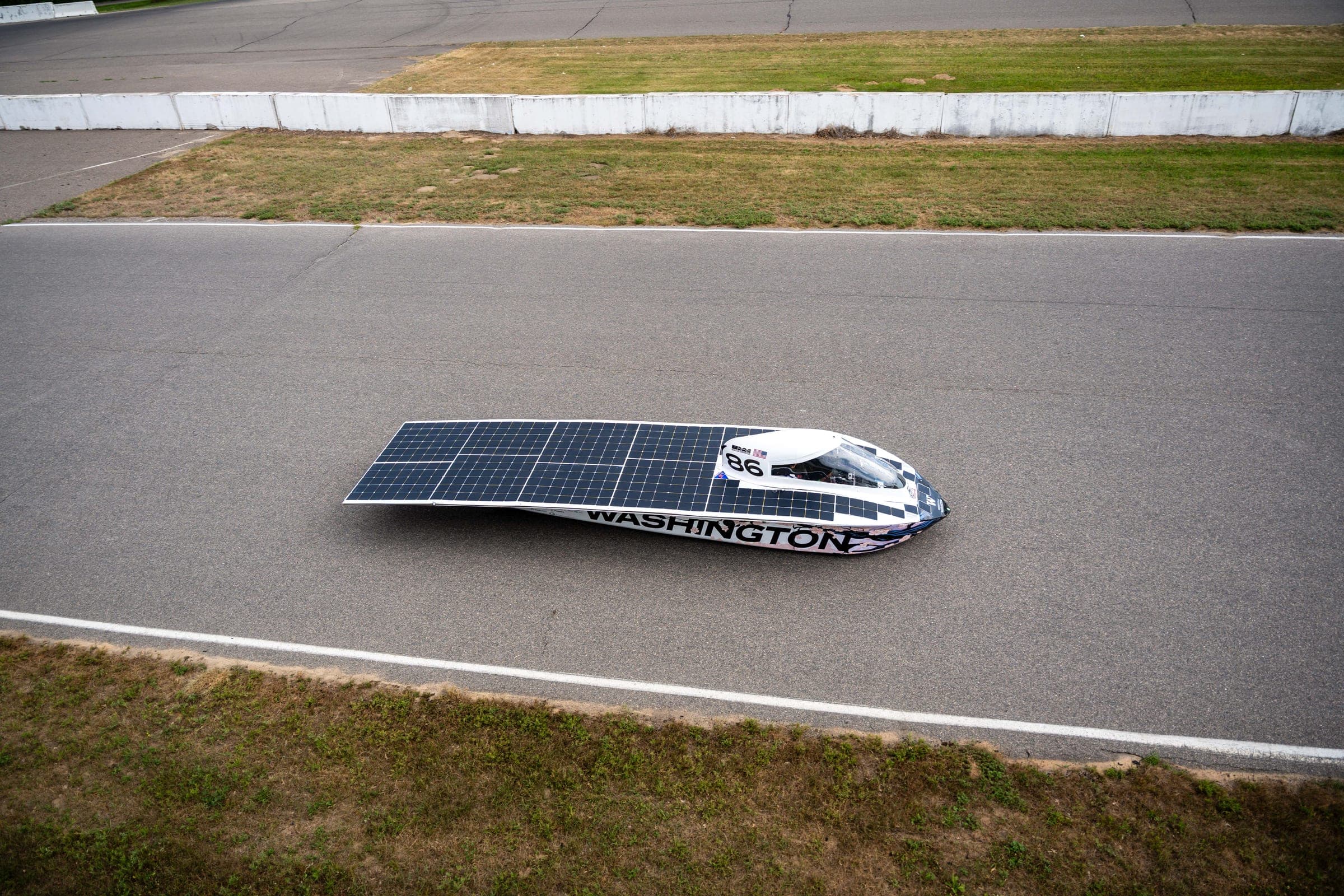
Sakura drove over 2,500 miles across the Formula Sun Grand Prix and the American Solar Challenge combined, and completed both competitions without a single major failure.
Meet SakuraBy the numbers
The Season
- American SOV team, ASC 2026
- #1
- SOV class overall
- 4th
- Official race miles
- 1,749.4
- Official time
- 58:41:43
- Average mph
- 30.1
- Fastest lap, 3.1 mile track
- 3:44
- Laps at FSGP 2026
- 271
- SOV teams finished the race
- 4 of 29
The Car
- Solar cells
- 386
- Watts peak solar
- 1,540
- kWh battery
- 5.25
- Pounds
- 460
- Miles on battery alone
- 178
The Team
- Build hours
- 7,000
- To build the car
- $120,000
- Months, first design cycle
- 11
- Members
- ~50
- Years since founding
- 3
Our history
2023
Founded
The team is founded at the University of Washington.
2025
Formula Sun Grand Prix
Sockeye finishes 6th in the SOV class and wins Rookie of the Year in the team's first competition, qualifying the team for the 2026 American Solar Challenge.
2026
American Solar Challenge
Sakura, the first car the team designed from the ground up, races the Formula Sun Grand Prix and then the American Solar Challenge, finishing as the top American team in the SOV class and 4th overall.
Sights set on Australia.
Every season, we aim to build a faster, more efficient car than the last, and to send stronger engineers out into industry. Our long-term goal is the Bridgestone World Solar Challenge in Australia, the most demanding solar race. Until then, we will keep competing at the American Solar Challenge and the Formula Sun Grand Prix, using each race to push our engineering further and to build the team that will one day race in Australia.